ERC Consolidator Grant 2020: MySocialBeing
Mycenaean Social Belonging from an Integrative Bioarchaeological Perspective


Mycenaean Social Belonging from an Integrative Bioarchaeological Perspective
| Project Leader | Philipp W. Stockhammer |
|---|---|
| ERC Consolidator Grant Budget | 1,999,751.25 €, financed by the European Research Council |
| Project term | 01.01.2022–31.12.2026 |

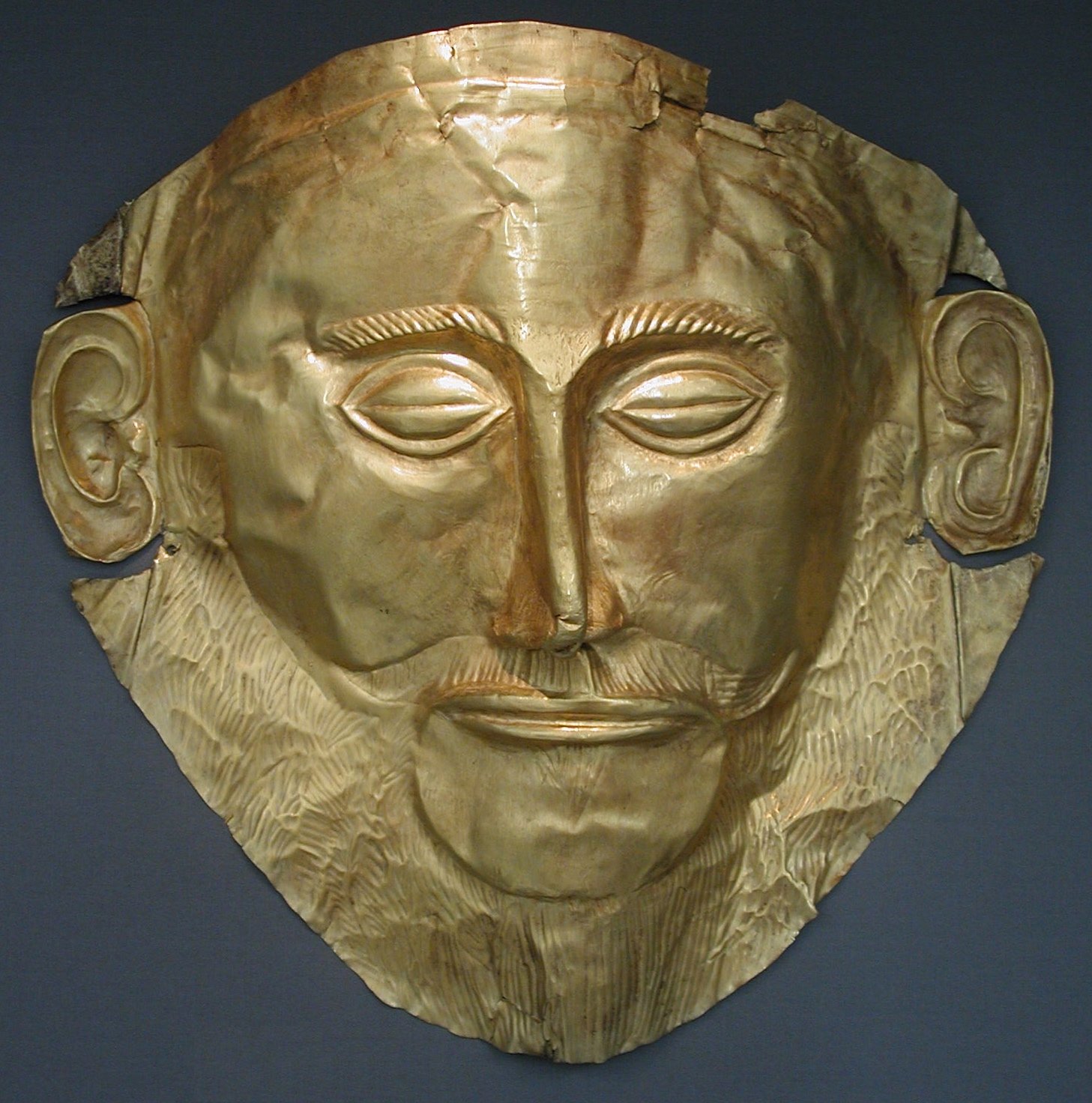
(image: DieBuche 2005, CC BY-SA 3.0, https://commons.wikimedia.org/wiki/File:MaskeAgamemnon.JPG)
When Heinrich Schliemann excavated the famous shaft graves of Mycenae in 1876, his rich findings attracted worldwide attention to this previously little-known prehistoric culture which kept fascinating a broad audience until now. Subsequently, the Late Bronze Age (LBA) of the 2nd mill. BC on the Greek Mainland was called “Mycenaean”, a modern term used broadly for LBA societies of Greece since then. The fact that several human individuals used to be buried together in the same grave already raised Schliemann’s thoughts about their social relationship. Believing in the historicity of the Homeric epics, Schliemann identified them as Agamemnon and his family and thereby initiated the debate about social belonging in Mycenaean Greece, which has still not been solved.

© Klearchis Kapoutsis 2010, CC BY 2.0, https://de.m.wikipedia.org/wiki/Datei:Treasury_of_Atreus_-_Klearchos_Kapoutsis.jpg
In the past 100 years, hundreds of LBA collective graves of different types have been excavated on the Greek Mainland – from single tholos tombs to large chamber tomb cemeteries with hundreds of individuals buried in them – and these burials have become one of the hallmarks of the Mycenaean Era.
It is clear that the selection of individuals for burial in a collective tomb (i.e. a tomb where – over a period of time – several deceased humans were buried) was based on notions of social relatedness between them and that the practices during and after burial at the necropolis also shaped social belonging within the community of the living. However, it is still unclear which factors guided the notions of social belonging which then determined the selection of individuals for the burial in a collective grave. Different terms have been used to name the social relations materialised in the collective graves, e.g. “family”, “kinship”, “household” or “oikos”.
However, the character of these relations, their formation as well as their transformation over time and their diversity within LBA Greece are still hardly known. The unique wealth of these burials has the potential to serve as a paradigmatic case to overcome one of the key challenges of archaeology, i.e. understanding the complexity of social belonging in the deep past and transcending still dominant simplistic notions of biologically determined prehistoric “families”, a necessity recently pointed out by critical researchers. Sociologists, anthropologists and historians have long been aware of the complexity of social institutions as long as sufficient literary sources and/or participant observation/interviews are available. For ancient Greece and Rome, the complexity of the oikos and the familia has become clear, which included biologically related and non-related individuals in one social entity, and similar insights have been reached for other early societies with sufficient textual and archaeological sources e.g. Pharaonic Egypt. As soon as these sources fade out, biological determinism will usually enter archaeological interpretation. Whereas Mycenaean literary sources inform us about the importance of human mobility and the structure of the different palace-based states, our knowledge about their social organisation beyond palatial administration is limited. It is now time to unravel the constitution of social belonging out of the dialectical interplay of biological relatedness and social practices and rethink the constituents of social structures in the past by applying a cutting-edge integrative bioarchaeological approach to the outstanding archaeological source material of the Mycenaean Era. Novel insights into the complexities of Mycenaean societies beyond the elites will not only revolutionise our understanding of LBA Greece and answer long-standing questions but also help to further establish an innovative integrative bioarchaeological approach and enable a deep historical understanding of the complexities of historic and present-day social relationships.
The main focus of the first 18 months of the project was the archaeological sampling and the archaeological contextualisation of the samples as well as the scientific lab analyses, especially the aDNA analyses. All relevant samples have reached the laboratory. The archaeological evaluation and contextualisation have gained momentum. We were even able to publish two ground-breaking articles: First, Skourtanioti et al. 2023 (https://doi.org/10.1038/s41559-022-01952-3) shedding a revolutionary new light on social belonging in the Bronze Age Aegean and esp. unravelling the great importance of cousin-cousin marriage which in its scale in the Bronze Age Aegean is unprecedented throughout human prehistory to this day. Moreover, we were able to construct the first family pedigree ever generated for the ancient Mediterranean.


© Nikola Nevenov
With this paper, MySocialBeIng has already managed to completely transform our understanding of social belonging in the Bronze Age Aegean. To build the methodological basis for the radiocarbon modelling, we collaborated with radiocarbon specialists on a methods paper in year 1 and have been able to publish this as Massy et al. 2022 in PlosOne (https://doi.org/10.1371/journal.pone.0270374). After 18 months, we are now amid lab analyses and further evaluation of datasets, which are promising additional great results. The first DNA screening for the site of Elateia, i.e. the necropolis with the most samples to be studied within MySocialBeIng, indicated very promising overall DNA preservation. We are now looking forward to the production of DNA capture data sets and their subsequent evaluation and integration with the archaeological record.
MySocialBeIng has already revolutionised our understanding of social belonging in the Bronze Age Aegean. According to the present state of research, no other region in human prehistory was marked by such a high degree of cousin-cousin marriage which requires a particular explanation. The societal importance of this practice demands further reflection to trace its origins, reasons and long-term societal impact. Moreover, the project has been able to generate the first biological pedigree for individuals living in the same architectural entity, which has demonstrated that both - biological and cultural - aspects played a decisive role in the living together of human individuals. These insights are only the first of their kind and will now be supplemented by much larger datasets which are currently produced within the project and will be evaluated and published in the months and years to come.
Prof. Dr. Philipp W. Stockhammer
I am a prehistoric archaeologist with a particular interest in the Bronze and Early Iron Ages – especially in the Eastern Mediterranean – as well as archaeological theory and the integration of archaeological and scientific analyses. Intercultural encounter, mobility, social belonging, health and food cultures of the past have been in the focus of my interest for many years. I (co-)directed several collaborative research projects (“MySocialBeIng”, “FoodTransforms”, “BEFIM”, “Times of Upheaval”) in which we aimed at writing a novel bioarchaeologically inspired prehistory.
Ludwig-Maximilians-Universität München
Institut für Vor- und Frühgeschichtliche Archäologie und Provinzialrömische Archäologie
Geschwister-Scholl-Platz 1
80539 München
Germany
philipp.stockhammer@lmu.de
and
Department of Archaeogenetics
Max Planck Institute for Evolutionary Anthropology
Deutscher Platz 6
04103 Leipzig
Germany
philipp_stockhammer@eva.mpg.de
Dr. Alissa Mittnik
I am a geneticist who specialises in integrative archaeoscientific methodologies aimed at reconstructing past social organisation, including social stratification, kinship structures, gender roles, and cultural practices. Within the MySocialBeIng project, I oversee the archaeogenetic analyses contributing to our understanding of genetic correlates within social frameworks of the Bronze Age Aegean. My research focuses on the ancient Mediterranean and Central Europe, exploring modes of cultural transformation, mobility, connectivity, and past constructions of kinship.
Department of Archaeogenetics
Max Planck Institute for Evolutionary Anthropology
Deutscher Platz 6
04103 Leipzig
Germany
alissa_mittnik@eva.mpg.de
I studied pre- and protohistoric archaeology and ancient history and have a special interest – amongst others – in agriculture, early technologies, nutrition, ritual, and women. I joined Philipp Stockhammer's team at LMU Munich in 2016 for projects such as BEFIM and FoodTransforms. My main task within MySocialBeIng is collecting and integrating archaeological and cultural-historical background information with the project's scientific results, e. g. with an eye on women and foreigners. I co-author and edit papers and assist with project management.
Ludwig-Maximilians-Universität München
Institut für Vor- und Frühgeschichtliche Archäologie und Provinzialrömische Archäologie
Geschwister-Scholl-Platz 1
80539 München
Germany
j.friesknoblach@lmu.de
Dr. Suzanne Freilich
I am an anthropologist and archaeogeneticist. My main interest is in combining multidisciplinary approaches spanning archaeology, genetics and anthropology. In particular, my work focuses on the archaeogenetic analysis of ancient individuals from a variety of burial contexts and time periods to elucidate the genetic and social histories of past people and communities. This encompasses within community patterns of biological relatedness and social organisation, as well as broader scale patterns of migration and mobility. I also work with strontium isotope signatures and carbon and nitrogen stable isotopes to help reveal patterns of human mobility and diet in prehistory.
Department of Archaeogenetics
Max Planck Institute for Evolutionary Anthropology
Deutscher Platz 6
04103 Leipzig
Germany
suzanne_freilich@eva.mpg.de
Irene Högner M.A. (PhD student)
I am an archaeologist with a focus on funerary contexts and interdisciplinary approaches that integrate data from anthropological, archaeogenetic and isotope analyses. My research interests are questions of cultural and social identities, kinship, and secondary burial practices. In my PhD project within MySocialBeIng I analyse the chamber tomb necropolis of Elateia-Alonaki (Central Greece) with an integrative multi-proxy approach. The aim is to investigate the distribution patterns of individuals’ genetic kinship, diet, mobility, and material culture and thus for the first time to explore the factors promoting joint burial in chamber tombs. I will also draw conclusions regarding associated notions of social kinship and belonging.
Ludwig-Maximilians-Universität München
Institut für Vor- und Frühgeschichtliche Archäologie und Provinzialrömische Archäologie
Geschwister-Scholl-Platz 1
80539 München
Germany
irene.hoegner@lmu.de
Dr. Ioanna Moutafi
I am a bioarchaeologist specialising in the excavation and contextual analysis of human remains from the prehistoric Aegean. The focus of my research is social bioarchaeology. Working primarily with collective skeletal assemblages from the Bronze Age Aegean, I employ a multi-dimensional biosocial approach that brings together traditional bioarchaeology, mortuary theory and current advances in archaeothanatology and funerary taphonomy, with the aim to shed light on the social dimensions of Aegean mortuary practices. In MySocialBeIng I will mostly work on the Mycenaean Tholos of Amfissa, the only tholos ever found so far in Phokis, Greece. This tomb is rather peculiar as the tholos contains more than 100 individuals, posing special interpretive questions. The multidisciplinary approach of Philipp Stockhammer in MySocialBeIng and the collective expertise of his team provide the ideal framework to address this challenge.
Ludwig-Maximilians-Universität München (from 03/2024)
Institut für Vor- und Frühgeschichtliche Archäologie und Provinzialrömische Archäologie
Geschwister-Scholl-Platz 1
80539 München
Germany
imoutafi@yahoo.gr
Dr. Eirini Skourtanioti
I am an evolutionary biologist specialised in ancient DNA and human population genetics. My research is focused on an integrative approach of genomic data with archaeological theory and evidence. Through the computational analysis of ancient genomes, I study different biological processes, from population admixture and signatures of natural selection to biological relatedness and marital practices, contributing new information to past mobility, social organisation and interaction of human populations with their environment. By applying this approach in the Aegean, we have revealed hitherto unknown aspects of family organisation during the Bronze Age. Within MySocialBeIng, I will analyse intra- and inter-cemetery data from the Mycenaean and post-Mycenean periods from Attica for fine-scale population structure and kinship patterns.
Ludwig-Maximilians-Universität München (from 04/2024)
Institut für Vor- und Frühgeschichtliche Archäologie und Provinzialrömische Archäologie
Geschwister-Scholl-Platz 1
80539 München
Germany
eirini_skourtanioti@eva.mpg.de
Anthi Tiliakou (PhD student)
I am an anthropologist skilled in different areas of archaeology, osteological analysis and forensic science and currently conduct research in ancient DNA and bio-cultural evolution of the Helladic Region. More recently, the multilevel analysis of human skeletal remains has significantly contributed to the better understanding of how human mobility and biological kinship might have impacted the formation of social identities, socio-cultural dynamics and post-mortem handling of individuals. By implementing genetic data to the archaeological and anthropological contexts available, I aspire to propose answers to these questions and bring biological kinship and genetic ancestry into the play of human groups dynamics.
Department of Archaeogenetics
Max Planck Institute for Evolutionary Anthropology
Deutscher Platz 6
04103 Leipzig
Germany
anthi_tiliakou@eva.mpg.de
Massy et al. 2022: K. Massy/R. Friedrich/A. Mittnik/P. W. Stockhammer, Pedigree-based Bayesian modelling of radiocarbon dates. PLoS ONE 17(6): e0270374.
https://doi.org/10.1371/journal.pone.0270374
Skourtanioti et al. 2023: E. Skourtanioti/H. Ringbauer/G. A. Gnecchi Ruscone/R. A. Bianco/M. Burri/C. Freund/A. Furtwängler/N. F. Gomes Martins/F. Knolle/G. U. Neumann/A. Tiliakou/A. Agelarakis/M. Andreadaki-Vlazaki/P. Betancourt/B. P. Hallager/O. A. Jones/O. Kakavogianni/A. Kanta/P. Karkanas/E. Kataki/K. Kissas/R. Koehl/L. Kvapil/J. Maran/P. J. P. McGeorge/A. Papadimitriou/A. Papathanasiou/L. Papazoglou-Manioudaki/K. Paschalidis/N. Polychronakou-Sgouritsa/S. Preve/E.-A. Prevedorou/G. Price/E. Protopapadaki/T. Schmidt-Schultz/M. Schultz/K. Shelton/M. H. Wiener/J. Krause/C. Jeong/P. W. Stockhammer, Ancient DNA reveals admixture history and endogamy in the prehistoric Aegean. Nature ecology & evolution January 2023.
https://doi.org/10.1038/s41559-022-01952-3